Pseudo-Rhodian Drachm under Perseus, Macedon. 179-168 BC.
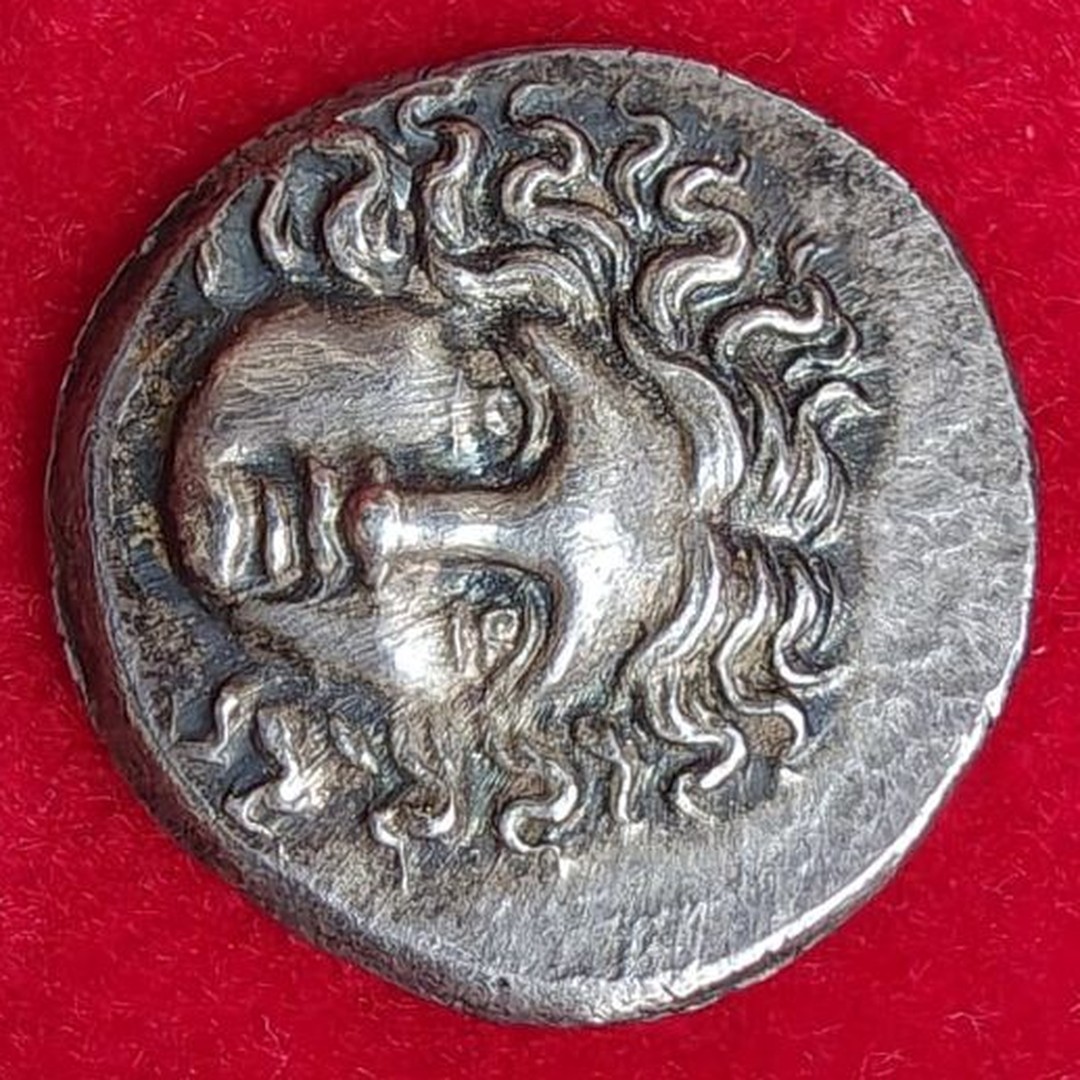
Vorderseite
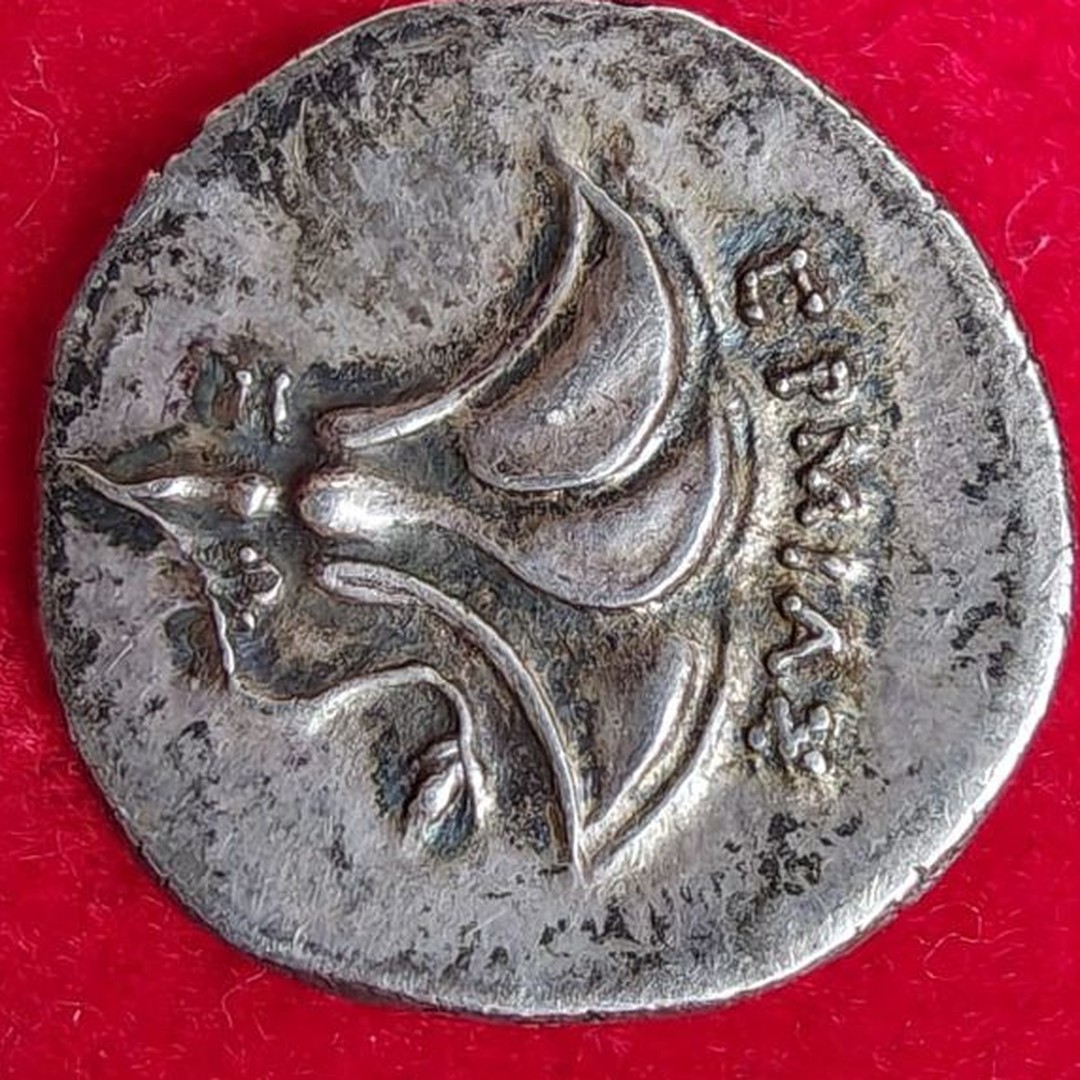
Rückseite
Drachm (Silver, 16 mm, 2.61 g, 6 h), pseudo-Rhodian issue, uncertain mint in Thessaly, struck under the magistrate Hermias, circa 171. Head of Helios facing, turned very slightly to right. Rev. EPMIAΣ Rose with bud to right; flanking stem, Z-Ω. Price, Larissa, pl. LV, 247. SNG Keckman 793.
Ashton argued in 1988 that this coinage was struck by Perseus to pay Cretan mercenaries in his army, since they were used to get paid in this currency. Slightly lower weight standards, unknown magistrates, and other inconsistencies lead suggest non-Rhodian origins. Later studies have linked the silver composition to mines under Macedonian control.
See:
Ashton, R. H. J. (1988). "A Series of Pseudo-Rhodian Drachms from Mainland Greece." The Numismatic Chronicle, 148, 21–32, pls. 4–6.
J.-N. Barrandon & A. Bresson, "Imitations crétoises et monnaies rhodiennes: analyse physique," Revue Numismatique 6e sér., 152 (1997), 137–155, DOI 10.3406/numi.1997.2134
Warum dieses Stück?
This coin marks the first of Alexander's successor kingdoms to fall to Rome, and it shows the last Antigonid king managing his war chest with more sophistication than his reputation allows. Perseus needed money his Cretan mercenaries would take at face value, so he struck it in the form they trusted: Rhodian, and on the older Rhodian standard they knew.
To me, this coin is a small window into the economics, plans, and reasoning of the figures that stood up to Rome, beyond what is captured by Livy and other writers.
Eingereicht von CB van Aken